
Depression - A Father and Daughter Perspective
I am a firm believer that you meet and connect with people as you go through life for a reason. During Covid, I reconnected with someone I had been to secondary school with. While we were in the same English class, our school days did not really cross paths any more than that. The power of Facebook, though. as you get older, and one old school friend leads to another, meant our paths finally crossed again.
Andy Wareham, who sat at the back of the English class, by his own admission doing just enough to get a reasonable grade, now runs Silver Seas Counselling.
His brutally honest account of how his life and experience of depression lead him to being a Counsellor, was one that resonated with me, because I am running The Custody Coach as a direct result of my life path too.
Depression and family separation often go hand in hand, despite how much we try and hold it together for the children thinking we are protecting them.
I am always interested in hearing the views of young people and their account of what it was like when their parents separate and they were thrust into the life of weekend visits and navigating their parents different ways of coping with it and the fall out of that.
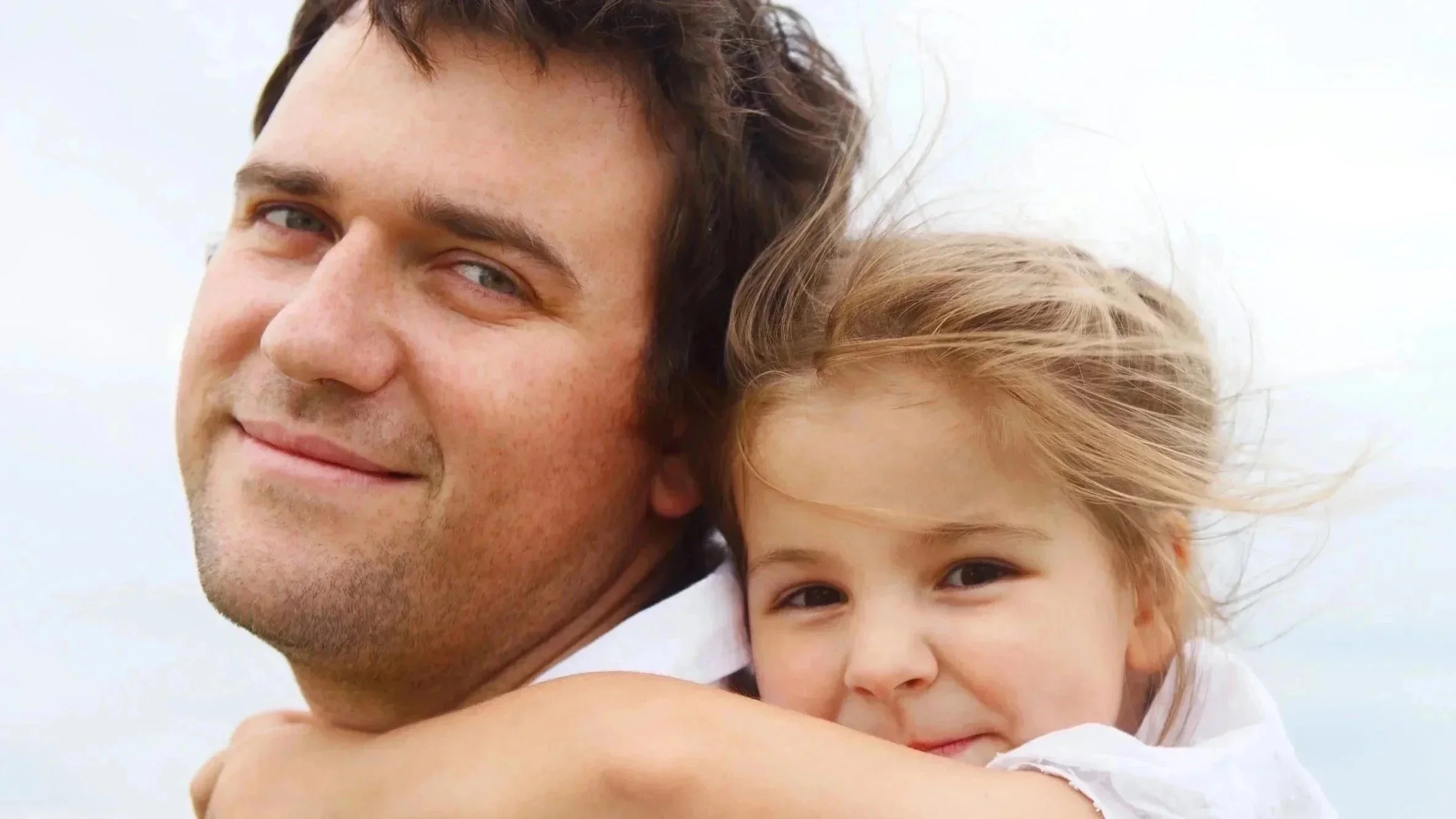
In this article Andy and his daughter, Sophie, talk candidly about Andy’s depression and how as a young child, seeing him every other weekend, she was acutely aware from a very young age that she had to try and understand her father’s good days and bad days.
Living in the Shadows: A Father and Daughter’s Story of Depression
There are chapters in my life that I wish I could rewrite - not to erase the pain, but to rewrite the silences.
I suffered with serious bouts of depression throughout my daughter’s childhood. At times, it swallowed me whole. I separated from her mum when she was two, and from then on, I mostly saw her alternate weekends - every other Saturday felt like a glimpse of sunshine through thick grey cloud. I loved her fiercely, but I know there were times I felt unreachable, even to myself.
My intention was always to protect her from the worst of it. But the truth is, she still felt the tremors of my inner earthquakes.
"I always knew something was wrong."
Recently, we’ve been talking more openly about what those years were really like for her. I asked if she’d be willing to share some reflections. What she offered back stopped me in my tracks.
“I always remember feeling worried about what was going to happen. I could always tell - even from a young age - that something was wrong just by the slightest change in your patterns or voice. I’d worry that things would get really bad and I’d end up waking up and finding out my Dad had taken his own life.”
That last sentence broke me. I never realised that fear was living so close to her skin, so early in her life.
“At times I felt that it was partly my fault that you were struggling. You had a breakdown when I was a baby and I always wondered whether it was my fault that it happened.”
That kind of guilt - the kind that children carry in silence - is its own kind of heartbreak. She saw the shadows I thought I’d hidden. She felt the tension in the air even when I smiled and said, “I’m fine.” And in trying to protect her, I unintentionally left her to walk through confusion and fear alone.
Understanding the Black Dog
She remembers reading a children’s book that helped her give a shape to what she’d been living alongside:
“I vividly remember reading a book that used a black dog to symbolise how depression kind of follows you around. It helped me understand that it wasn’t something that would just go away - but something you learn to cope with. Sometimes it comes back, but it can be managed.”
Even then, she was searching for something to help her make sense of it all.
What she craved most, she told me, was honesty.
“I wish there was more honesty. I understand that as a parent you never want your child to worry about you, but telling me you were fine when it was obvious you weren’t just made my anxiety worse. I wasn’t stupid - I knew something wasn’t right.”
Looking back, I know she’s right. I thought I was shielding her. In reality, I was just building walls that made her feel even more alone.
Finding Support – and a Sense of Self
She told me her mum’s boundaries - though painful at the time - gave her some safety. She also started seeing a counsellor in high school who helped her name and navigate her emotions. Those early years shaped her.
“I think having a Dad with mental health issues has taught me to be more patient and forgiving. Not everyone is coping, and sometimes that’s reflected in their behaviour. But I’m firm with my boundaries now. I’ve learned when I’m not in the right headspace to carry other people’s pain.”
Today, she works in a role supporting people who’ve been labelled and often cast aside. She offers them compassion without losing herself in the process.
A Daughter’s Voice, in Her Own Words
At 13, she wrote a poem. It was later published in Busta Rhyme, Lancashire, and I recently revisited it. It was the inspiration for writing this piece. When I read it, I was staggered by how much emotion, imagery and depth she had poured onto the page.
“I wanted to explain depression in a way that people could understand. I tried hard to compare it to things people could visualise. I feel a little sad that I wrote something so profound at such a young age. But also proud. I wouldn’t change anything I said.”
Here is her poem.
Why Me?
As I sat there staring hopelessly
At the wall, I wondered why me?
Why can't I concentrate?
|Why am I so tired?
Where has all my energy gone?
Why do I feel so worthless?
I have no future.
I'm in a constant state of anxiety.
There's no smile left in me,
I'm not part of the real world. I'm a ghost wandering alone,
I'm drowning, but everyone around me is breathing.
I can't escape,
I'm trapped in a room,
There are no windows, no light, no doors.
I'm stuck under a glass floor.
Banging and shouting - just trying to get the rest of the world's attention.
No one can hear me.
No one knows I can't escape.
I'm at the bottom of a well - there's no water,
And it's pitch black.
I'm trapped in my own mind.
Will I always feel like this?
How can I make this end?
Would anyone miss me?
I'm scared... so scared.
by Sophie, aged 13
Even now, those lines bring tears to my eyes. They carry not just pain, but clarity and wisdom far beyond her years.
If I Could Go Back...
As I reflect now, I wish I had trusted her more with the truth - not all of it, not the raw, unfiltered weight, but enough that she wouldn’t feel she had to carry it in the dark. I wish I had said:
“I’m struggling, but I love you, and I’m doing everything I can to keep going.”
I wish I had let her in, gently.
But I also feel immense pride. She took something that could have hardened her and instead became someone thoughtful, warm, boundaried, and deeply kind.
To Other Parents Who Struggle
If you’re a parent struggling with mental health, please know this: Your silence doesn’t always protect your child - it can isolate them.
They may already know more than you think. And sometimes, naming your pain in age-appropriate ways can help them name their own.
It’s never too late to have those conversations. I know that now.
My daughter gave voice to both our shadows. And in doing so, she lit a path I’m still learning to walk.
You can read more about Andy Wareham, and how his services can help those seeking answers and support at https://www.silverseascounselling.co.uk